

A well-designed Vietnam and Cambodia itinerary is not necessarily the one that covers the most destinations. When two countries are combined, the bigger risk is spending valuable travel days experiencing the same type of place twice: another historic city after Hue, another temple complex after Angkor, or another river landscape after already spending time in the Mekong Delta.
The solution is not to rank destinations as “worth visiting” or “not worth visiting”. It is to look at experiential overlap. If two stops create a similar feeling, removing one can make room for something that adds a genuinely different dimension to the journey.
From a local DMC perspective, this is often where itinerary design becomes more valuable than simply adding destinations. The question is not what else can fit? but what can be removed so the Vietnam–Cambodia experience feels more varied, more relaxed and more memorable?
Table of Contents
1. Start With Experiences, Not Destinations
The first mistake when planning a two-country journey is to evaluate every destination independently. Hue may be worth visiting, Hoi An may be worth visiting, Siem Reap is obviously worth visiting, and the Mekong Delta may be highly recommended. If each destination is judged on its own, there is little reason to remove anything.
The problem appears when the journey is viewed as a whole. Several destinations may be excellent individually while contributing almost the same type of experience to the overall trip.
For example, a traveler might visit Hanoi for historic architecture, Hue for imperial heritage, Hoi An for its preserved old town and then Siem Reap for Angkor. These are not identical destinations, but four consecutive cultural stops can create a similar rhythm: walking through historic spaces, listening to explanations about the past, photographing architecture and moving on to the next heritage site.
That does not mean one of them should automatically be deleted. Instead, ask what each stop contributes that the others do not.
A useful way to assess a Vietnam and Cambodia itinerary is to divide experiences into broad categories:
- Urban and historic: old quarters, colonial architecture, royal heritage and historic cities
- Archaeological and monumental: temples, ruins and major heritage complexes
- Nature and landscapes: caves, mountains, bays, rivers and national parks
- Living culture: artisans, food, villages, markets and local communities
- Relaxation and atmosphere: beaches, resorts, slow travel and time without scheduled sightseeing
The objective is not to achieve a mathematically equal mix of categories. Some travelers may genuinely want a heritage-heavy journey. The important point is to recognise when adding another stop provides more of what you already have, rather than something the journey is missing.
This is especially important when travel time between destinations is considered. A destination that requires a long transfer should offer a sufficiently different experience to justify the time spent reaching it.
2. Where Experiential Overlap Happens – And What You Can Consider Leaving Out
The most useful cuts in a Vietnam and Cambodia itinerary are rarely about eliminating famous destinations. Instead, they involve identifying where two or more stops perform essentially the same role in the journey and deciding which version is most relevant to the traveler.
2.1 Historic Cities: Do You Need More Than One or Two?
Vietnam has several destinations where history is experienced through streets, architecture and preserved urban environments, but they do not all tell the same story. Hanoi combines historic neighbourhoods, French colonial influences, contemporary city life and a particularly dense street culture. Hue focuses much more strongly on imperial Vietnam, while Hoi An reflects its history as a trading port through its preserved architecture, craft traditions and slower atmosphere.
That distinction means there is no universal rule that travelers should “skip” one of them. A traveler fascinated by Vietnamese history may find the contrast between Hanoi and Hue worthwhile, while a couple seeking a slower cultural experience may value Hoi An more than adding another major city.
The issue appears when a journey already contains several historic environments and another stop is being added simply because it is famous. After Hue and Hoi An, for example, a further destination whose principal appeal is another historic centre may provide less contrast than expected. If the traveler is already satisfied with architectural and heritage sightseeing, that time could instead be used for food, countryside, craft or simply a slower stay.
Hoi An is a good example of why depth can be more valuable than another destination. Its compact scale makes it possible to move beyond the Ancient Town and explore surrounding villages, food traditions and craft activities. Vietnam’s tourism authorities have increasingly positioned the destination around slower and more immersive forms of travel, including cycling, rural experiences and traditional crafts.
So the question is not “Which historic city should I skip?” It is “Which historic experience have I already had, and which one would still add a different perspective?”
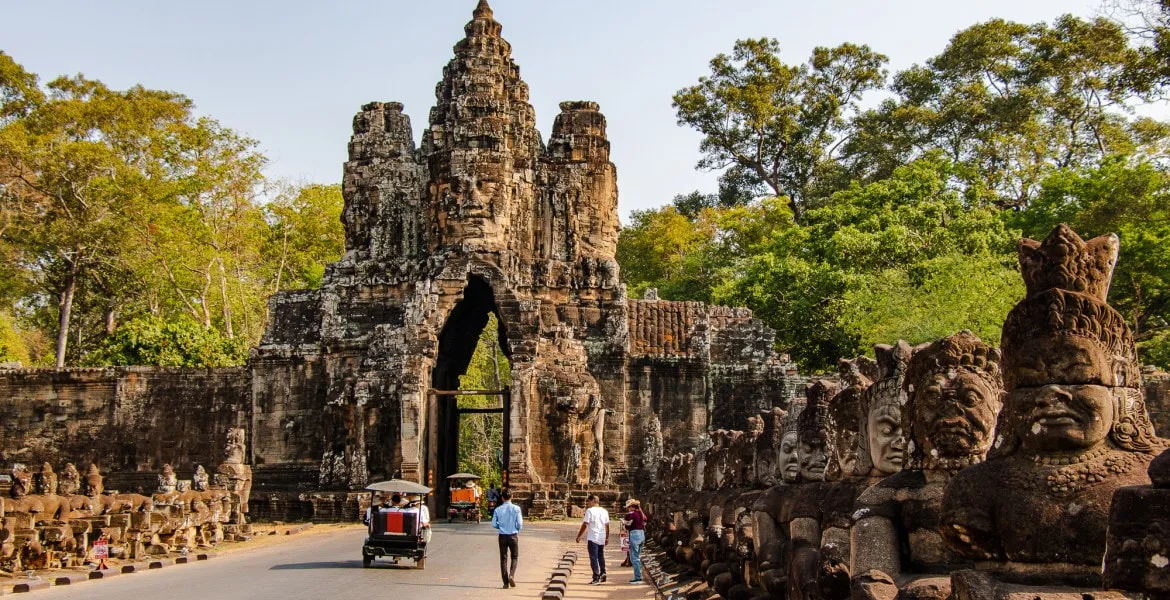
2.2 Temples and Heritage Sites: When Angkor Is Already the Major Archaeological Experience
Cambodia changes the calculation because Angkor is not simply another cultural attraction. The archaeological landscape around Siem Reap is large enough and varied enough to occupy a significant place in the overall journey, from Angkor Wat itself to other major temple complexes and the wider historical context of the Khmer Empire.
For travelers with a strong interest in archaeology, adding other historical sites in Vietnam can still be entirely appropriate. But for travelers who primarily want cultural variety, several consecutive days of monumental heritage can produce what might be called heritage fatigue: the sites remain impressive, but the emotional response becomes less intense because the sightseeing pattern has not changed.
This is particularly relevant when deciding how to use time around Central Vietnam. Hue’s Imperial City and royal tombs provide an important perspective on Vietnamese history, but if the traveler already plans substantial time at Angkor, adding several additional monument-focused visits may not necessarily deepen the cultural experience. The contrast may be stronger if one major heritage experience is followed by something participatory or nature-based.
That could mean keeping Hue for its distinct imperial story while reducing other less distinctive historical stops. Or it could mean giving Siem Reap more time rather than treating Angkor as a quick excursion before immediately moving on.
The principle is not to reduce the amount of culture, but to vary the way culture is experienced. A major archaeological site can be followed by a craft workshop, a food experience, a village encounter or time spent understanding contemporary Cambodian life. The traveler then moves from observing heritage to engaging with the culture that continues beyond the monuments.
2.3 Rivers, Bays and Nature: Similar Scenery Does Not Always Mean Similar Experiences
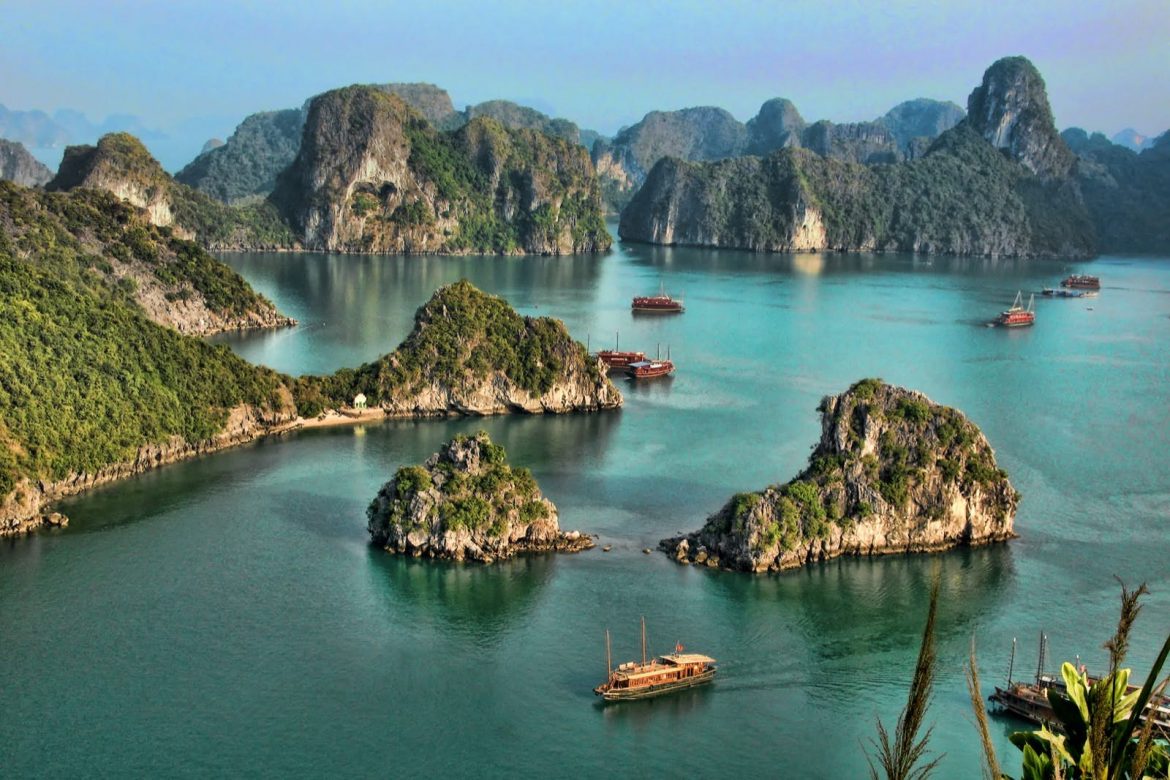
Water-based experiences require a slightly more careful comparison because visually similar activities can actually serve very different purposes. A cruise through Lan Ha Bay, a day in the Mekong Delta and a river experience in Cambodia all involve water, but they do not necessarily belong in the same experiential category.
The Mekong Delta is most valuable when approached as a living landscape. Its waterways connect agriculture, local transport, food production and communities, so the experience is fundamentally about how people live around the river. By contrast, a Lan Ha Bay cruise is primarily about limestone karst scenery, open water, relaxation and the distinctive experience of travelling by boat through the bay.
That means including both can make sense because they create different travel moods. The problem occurs when another river excursion is added simply because “a boat trip” sounds attractive, without considering whether it contributes a new cultural or geographical perspective.
The same principle applies to nature destinations. Phong Nha is not simply another scenic area after a bay cruise because its caves, karst formations and national-park environment create a fundamentally different experience. In contrast, adding another viewpoint or limestone landscape mainly for scenery may have less impact if travelers have already experienced a major karst destination.
For a well-designed Vietnam and Cambodia itinerary, the question should therefore be: What is this landscape doing in the journey? Is it providing adventure, relaxation, wildlife, geological interest, local life or visual scenery? If two stops answer the same question, one may be enough.
3. What Should Replace a Redundant Stop?
Removing a destination only improves an itinerary if the time saved is used intelligently. Otherwise, travelers simply exchange one sightseeing stop for another and end up with the same problem in a different location.
3.1 Give More Time to a Destination That Deserves It
One of the most valuable replacements is often not another destination at all. It is additional time in a place already included, allowing travelers to experience more than its headline attraction.
Hoi An illustrates this particularly well. A short visit can cover the Ancient Town and its most recognisable landmarks, but additional time allows the experience to expand into food, countryside, craft and local life. For travelers who have already spent several days visiting major historical sites, this slower rhythm can provide a useful change of pace.
The same applies to Siem Reap. Angkor rewards thoughtful pacing rather than simply checking off the most famous temples. Additional time can create room to explore different parts of the archaeological complex without rushing, or to balance temple visits with contemporary Cambodian culture, artisan experiences and local food.
This is one of the clearest advantages of removing a lower-value stop. The saved time becomes depth rather than empty space.
3.2 Replace Sightseeing With Participation
Another strong option is to change the traveler’s role. If several days have already involved looking, walking and listening, an activity that requires participation can refresh the entire journey.
This could be a private cooking experience, an artisan workshop, a market-led food activity, a countryside cycling experience or another locally guided encounter. The choice should be based on the traveler rather than added simply to make the itinerary “more experiential”.
For example, a traveler who has already visited several historic sites may gain more from learning a Vietnamese culinary technique with a local cook than from visiting another museum. A family might find a hands-on craft activity more memorable than another architectural tour, while a couple could prefer a private food experience that creates a shared moment rather than another scheduled sightseeing stop.
This is particularly effective in a two-country journey because Vietnam and Cambodia already provide plenty of monumental and historical content. Participation introduces a different relationship with the destination, making the overall journey feel more varied without necessarily requiring another long transfer.
3.3 Use New 2026 Experiences to Add Contrast
New experiences can also be useful when they introduce a genuinely different travel rhythm. The important point is not to include something merely because it is new, but to ask whether it offers something the existing itinerary lacks.
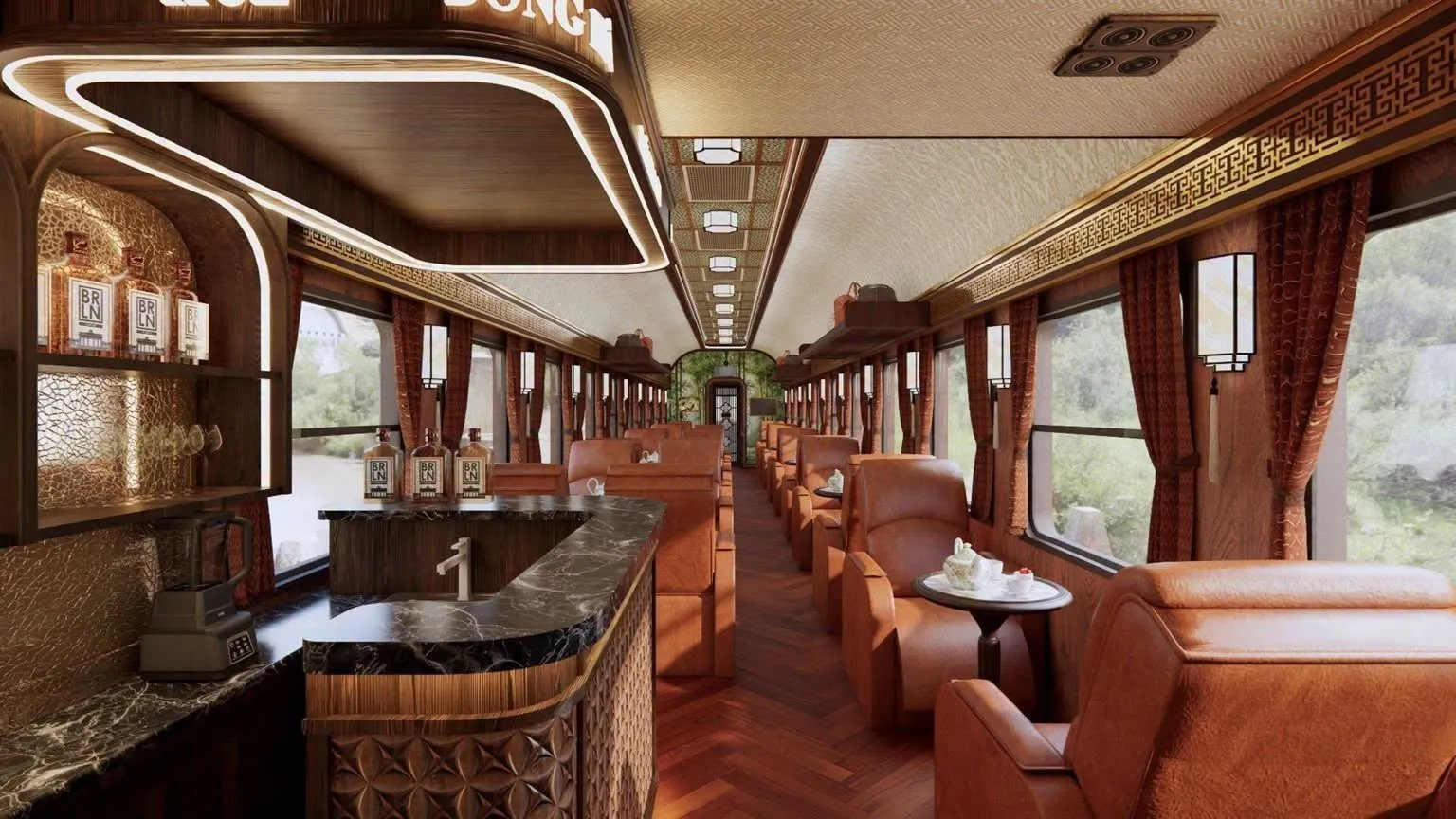
The planned Hue-Phong Nha tourist train, for example, is expected to introduce a new way of connecting Central Vietnam’s cultural and natural heritage from September 2026. The approximately 190-kilometre tourism route is designed to connect Hue, Dong Ha, My Trach, Dong Hoi and Tho Loc, with tourism-oriented features intended to make the journey itself part of the experience rather than simply a transfer.
For travelers already moving between heritage and nature in Central Vietnam, the value of the train lies partly in this change of perspective. Instead of adding another sightseeing stop, it can turn transportation into an experience and connect two different types of destination without creating another conventional road transfer.
The broader lesson is useful when planning for 2026: a new experience earns its place when it changes the rhythm of the journey. It does not need to be another major attraction to be valuable.
4. How a DMC Decides What to Remove From a Private Journey
There is no universal list of destinations that every traveler should cut from a Vietnam and Cambodia itinerary. The right decision depends first on the traveler’s interests, then on how those preferences translate into the overall rhythm, pace and variety of the journey.
A couple who loves architecture and history may happily include several heritage-focused experiences. A family may prefer to reduce historical sightseeing after one or two major sites and use the time for nature and active experiences. Travelers returning to Southeast Asia for a second visit may want to remove some of the classic highlights altogether and focus on food, crafts, local communities or landscapes.
Travel time is the second consideration. A destination that requires a flight, airport transfer, check-in and another transfer may effectively consume most of a day. If its main experience overlaps with somewhere already included, the opportunity cost becomes significant.
The third consideration is sequence. Two similar experiences can feel very different when separated by several contrasting days, but repetitive when placed one after another. This is why itinerary design cannot be reduced to a destination list. The order and rhythm determine how travelers actually perceive the journey.
Finally, a DMC should consider what happens after something is removed. If the replacement is simply another attraction from the same category, very little has been solved. The better decision is often to use that time for depth, participation, rest or a genuinely different landscape.
This is where local knowledge becomes useful. A destination specialist knows what can technically fit into a schedule; an experienced DMC also understands when a schedule has become too dense, when a transfer is not worth its opportunity cost and when a traveler would benefit more from staying longer rather than moving again.
Final Thoughts: A Better Journey May Mean Seeing Less
A strong Vietnam and Cambodia itinerary is curated rather than accumulated. Every destination does not need to be included simply because it is famous, beautiful or geographically convenient.
The better approach is to look at the journey as a collection of experiences. If two stops create the same type of cultural, historical or landscape experience, consider whether one can be removed and that time reinvested somewhere more distinctive.
That might mean deeper time in Hoi An, a more considered experience around Angkor, an active local encounter, or a new 2026 experience such as the Hue–Phong Nha railway. Sometimes, the best addition to a two-country journey is not another destination at all, but more time to experience the destinations already worth keeping.
At Lux Travel DMC, private journey design starts with understanding what each experience contributes, including knowing what does not need to be included. For travelers combining Vietnam and Cambodia, that means creating a journey with enough variety to remain engaging, enough depth to feel personal and enough flexibility to avoid turning two remarkable countries into a checklist.
Planning a private Vietnam–Cambodia journey for 2026? Let Lux Travel DMC help you decide not only where to go, but what is worth leaving out.


