

CAMBODIA
A land where ancient kingdoms, sacred architecture and living traditions endure.
Explore Cambodia
Cambodia is a country shaped by one of Southeast Asia’s great civilisations. At Angkor, monumental temples, reservoirs and ancient urban landscapes reveal the scale and sophistication of the Khmer Empire; elsewhere, older sanctuaries, royal traditions and historic towns trace an even broader story of the country’s past. Cambodia currently has five properties inscribed on UNESCO’s World Heritage List, all cultural sites, including Angkor, Preah Vihear, Sambor Prei Kuk and Koh Ker.
Yet Cambodia’s heritage is not confined to stone. It continues through Buddhist practice, traditional arts, river communities, food, craft and the everyday rhythms of contemporary life. With Oriva Journeys, we explore Cambodia as a living cultural landscape — connecting its iconic monuments with the people, places and traditions that give them meaning today.
CAPITAL
PHNOM PENH
LANGUAGE
KHMER
CURRENCY
៛ KHR
$ USD
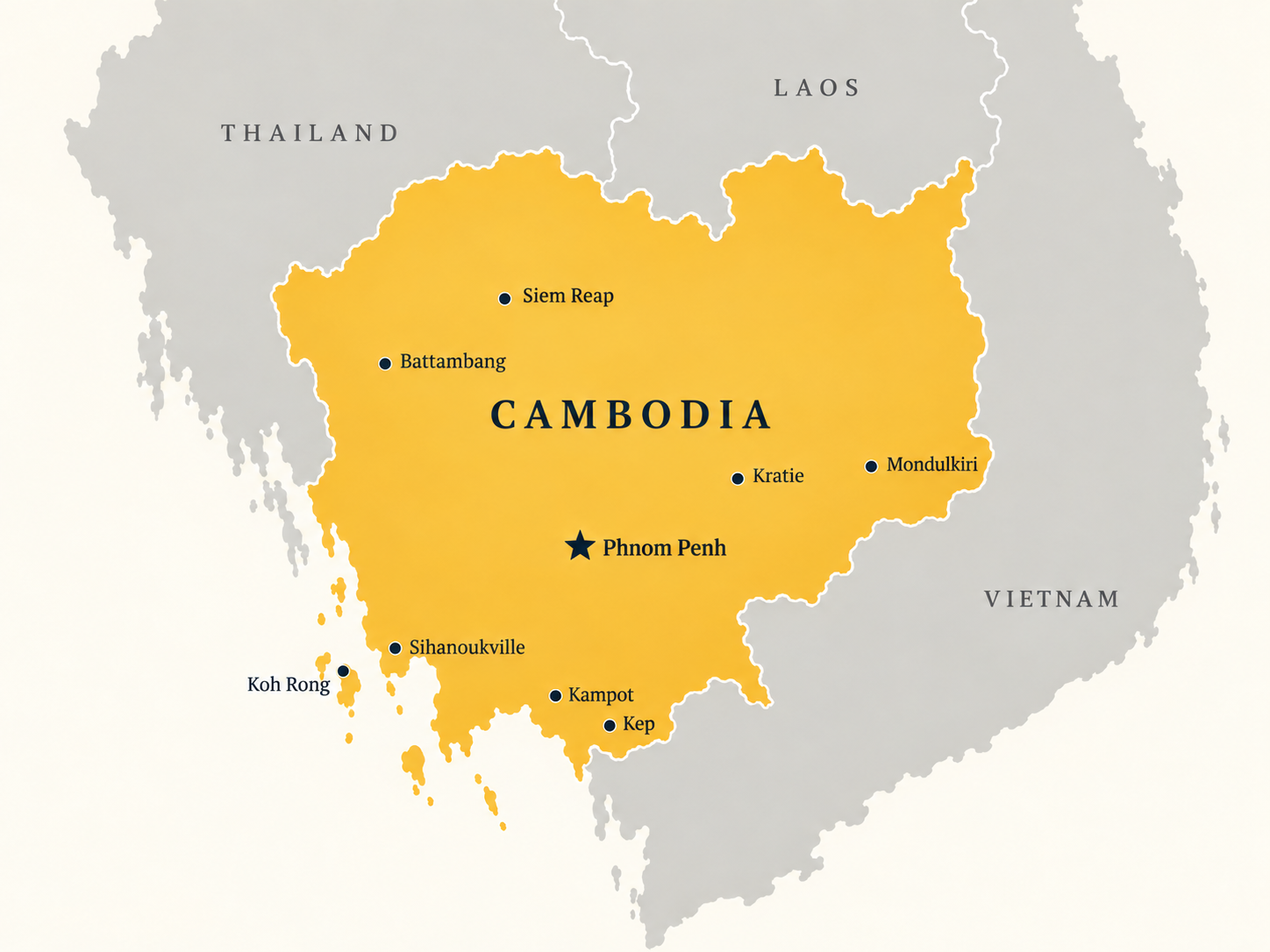
Where Will Cambodia Take You?
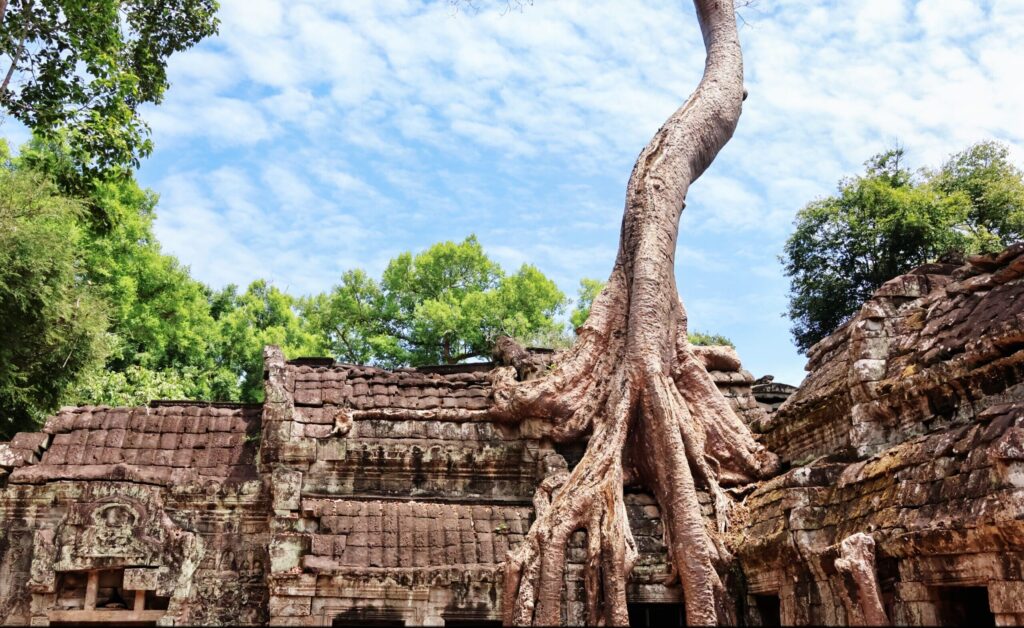
Siem Reap & Angkor
Phnom Penh
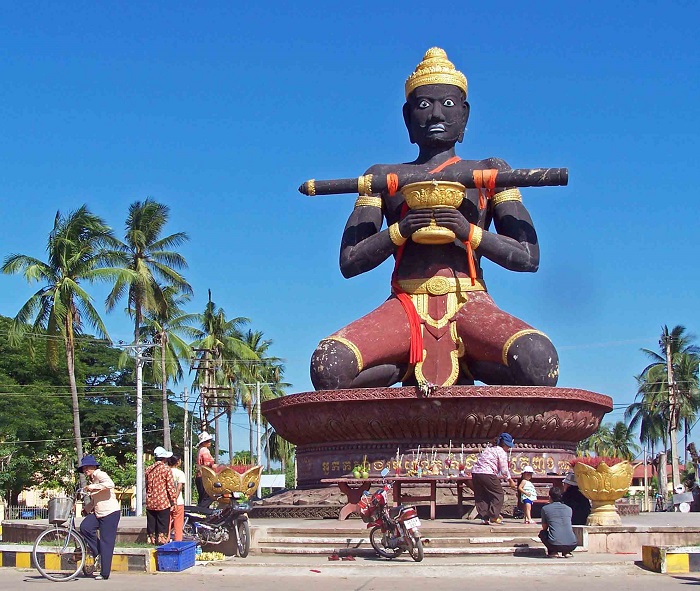
Battambang

Kampot & Kep

Sambor Prei Kuk

Koh Ker
Journeys Through Cambodia
Before You Go
A few useful things to know before planning your journey through Cambodia.
1. When is the best time to visit Cambodia?
Cambodia can be visited year-round, but the seasons create very different travel experiences. The dry season generally runs from November to April, with November to February offering cooler and more comfortable conditions for temple exploration and city travel. March to May becomes significantly hotter.
The green season from June to October brings regular rainfall, fuller waterways, greener rice fields and fewer visitors. At Angkor, this can also mean reflective temple moats, dramatic skies and a more atmospheric landscape.
For most first-time travellers, November to February offers the easiest conditions, while the green season can be rewarding for those who prefer fewer crowds and a softer, more lush landscape. Tourism Cambodia identifies November to April as the dry season and November to February as the most comfortable period.
2. How many days do I need for Cambodia?
Around 7–10 days works well for a first journey focused on Siem Reap, Angkor and Phnom Penh, with enough time to travel at a comfortable pace.
With two weeks, you can add Battambang, Kampot, Kep or additional archaeological sites such as Sambor Prei Kuk or Koh Ker. This creates a more rounded view of Cambodia beyond the headline monuments.
If heritage is your main interest, it is worth resisting the temptation to compress Angkor into a single rushed day. Giving the temples more time allows you to experience different architectural periods, landscapes and atmospheres rather than simply ticking off famous sites.
3. What are the best places to visit in Cambodia?
Siem Reap and Angkor are the natural starting point for most travellers, offering the country’s most extensive concentration of Khmer architecture and archaeological heritage. Phnom Penh adds another layer through the Royal Palace, National Museum, riverfront and the history of the modern capital.
Beyond these, Battambang offers a quieter provincial character, while Kampot and Kep bring riverside and coastal scenery into the journey. Sambor Prei Kuk and Koh Ker are particularly rewarding for travellers interested in understanding Khmer civilisation beyond Angkor.
Cambodia’s heritage stretches across multiple periods, from early sites such as Angkor Borei and Sambor Prei Kuk to the imperial landscapes of Angkor and later royal centres.
4. Can Oriva create a tailor-made Cambodia journey?
Yes. Oriva Journeys can shape a Cambodia itinerary around the kind of heritage experience you want — whether that means deeper archaeological exploration, architecture and art, local communities, food culture or a slower combination of temples, countryside and river life.
We can adjust the amount of time spent at major sites, include quieter temples beyond the main routes, and balance heritage-focused days with more relaxed local experiences.
The aim is to create a journey that gives Cambodia’s history enough context and breathing room, rather than treating its monuments as isolated stops.
5. What kind of experiences can I have in Cambodia?
Cambodia offers many ways to experience heritage beyond simply visiting temples. You can explore traditional craft workshops, spend time in village communities, visit local markets, discover Khmer cuisine, travel by boat through river and lake landscapes, and learn more about religious practice and contemporary cultural life.
For travellers interested in history, Cambodia also offers early archaeological sites that predate Angkor, royal architecture in Phnom Penh and regional temple complexes that show how Khmer art evolved across centuries.
This combination of monumental heritage and everyday culture is what makes Cambodia especially rewarding: the past is visible, but it is also continuously interpreted and lived in the present.
6. Is Cambodia suitable for first-time travellers to Southeast Asia?
Yes, particularly for travellers drawn to history, architecture and cultural heritage. Cambodia’s main travel route between Siem Reap and Phnom Penh is straightforward, and it is relatively easy to add the south coast or other regional stops depending on the time available. Tourism Cambodia notes that Siem Reap and Phnom Penh form the core of many itineraries, with the southern coast fitting naturally into longer trips.
The key is pacing. Cambodia rewards travellers who give its major sites enough time and avoid treating Angkor as a single attraction. A slower itinerary creates more room to understand how temples, communities, landscape and history connect.
Let Your Journey
Unfold at Your Pace
Tell us what inspires you, how you like to travel and how much time
you have. We’ll help shape a journey around you.
No fixed formula. Just a journey designed around you.


